
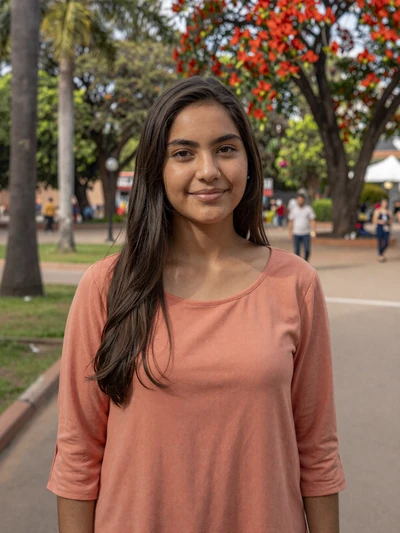
 ✓ Verified
Yanina, 25
Asunción, Paraguay
Elementary school teacher who loves sharing tereré with friends, singing Guaraní folk songs, and building a loving home with the right man.
Discover warm, humble, and deeply family-oriented Paraguayan women who carry the bilingual soul of Guaraní-Spanish heritage. Latin Hiwr connects you with thousands of verified profiles from Asunción, Ciudad del Este, Encarnación, and across Paraguay.
✓ Verified profiles · Free registration · Video chat available
Paraguayan women are the hidden treasure of Latin American dating - warm, bilingual, profoundly humble, and anchored in one of the strongest family-first cultures on the continent. Paraguay sits at the geographic and spiritual heart of South America, and its women carry that centrality in their character: they connect people, hold families together, and build relationships rooted in devotion rather than drama. If you've been searching for a genuine, traditional partner who values loyalty over luxury, Paraguay is where your search finds its answer.
What makes Paraguayan women truly unique is their bilingual Guaraní-Spanish heritage - a cultural duality found nowhere else in Latin America. Paraguay is the only country in the Americas where an indigenous language, Guaraní, holds equal official status alongside Spanish and is spoken by over 90% of the population regardless of ethnicity or social class. This linguistic heritage isn't a curiosity - it reflects a deep indigenous cultural pride that shapes how Paraguayan women view family, community, nature, and love. When she whispers "rohayhu" - "I love you" in Guaraní - she's speaking from a tradition thousands of years older than Spanish colonialism.
Paraguayan women carry themselves with a quiet strength that American men consistently describe as refreshing. There's no pretense, no performative femininity, no expectation that romance must be flashy or expensive. She values genuine presence over grand gestures, consistent reliability over spontaneous surprises, and deep conversation over surface-level flattery. Her humility isn't weakness - it's the confidence of a woman who knows exactly who she is and doesn't need external validation to prove it.
Family in Paraguay isn't a concept - it's the organizing principle of daily life. Multi-generational households are common, and Sunday family gatherings around a shared tereré circle are as sacred as church attendance. When a Paraguayan woman invites you into her family, she's offering you a place in a network of unconditional support, shared meals, and collective celebration that most American men have never experienced. Her neighbors across the border share related qualities - Bolivian women bring a similar indigenous cultural pride and deep family commitment, while Argentinian women share the mate-drinking tradition and passion for family gatherings, albeit with a more European flair.
The deeply Catholic faith that permeates Paraguayan society reinforces these values. Over 87% of Paraguayans identify as Roman Catholic, and the church calendar - from Easter processions to patron saint festivals - structures community life throughout the year. For Paraguayan women, faith isn't performative; it's the moral framework that guides their approach to commitment, fidelity, and the sacredness of marriage. She takes wedding vows with the full weight of spiritual conviction behind them.
✓ Verified
Asunción, Paraguay
Elementary school teacher who loves sharing tereré with friends, singing Guaraní folk songs, and building a loving home with the right man.
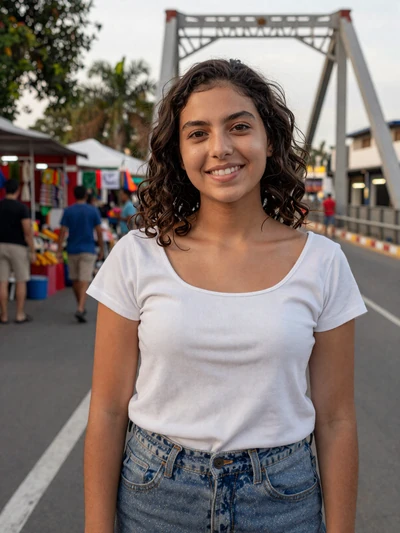 ✓ Verified
Ciudad del Este, Paraguay
Accountant and devoted daughter who enjoys weekend trips to Encarnación, cooking chipa for family gatherings, and honest conversations.
 ✓ Verified
Encarnación, Paraguay
Tourism student who loves Carnival season, Jesuit mission history, and dreaming of a cross-cultural love story with a caring American partner.
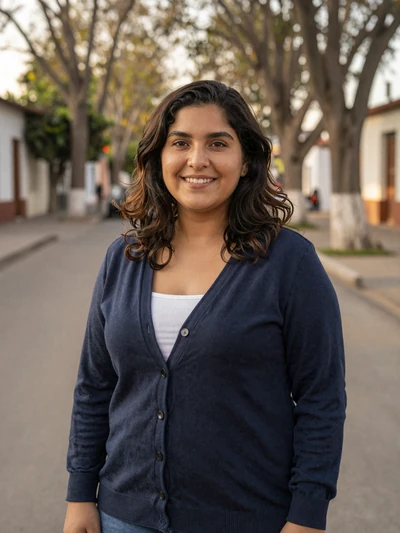 ✓ Verified
San Lorenzo, Paraguay
Nurse and single mother of one who values faith, stability, and a partner ready for a genuine blended family built on trust and kindness.
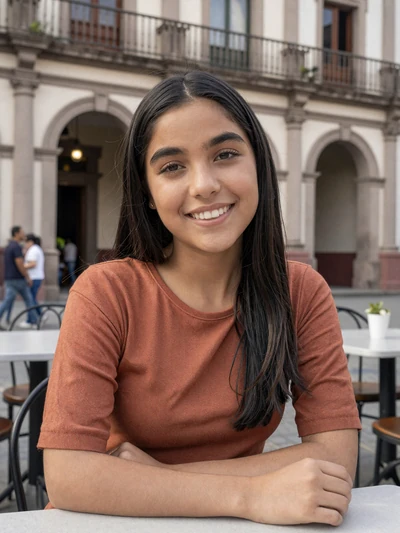 ✓ Verified
Asunción, Paraguay
Graphic design student who practices ñanduti lace weaving on weekends and dreams of sharing Paraguayan traditions with someone special.
 ✓ Verified
Luque, Paraguay
Veterinarian who adores animals, Sunday family asados, and looking for a faithful man who appreciates simplicity and deep devotion.
 ✓ Verified
Villarrica, Paraguay
Small business owner who makes traditional chipa bread, attends church every Sunday, and wants a man who values honesty above everything.
 ✓ Verified
Asunción, Paraguay
University student studying psychology who loves Guaraní poetry, folk harp music, and meaningful conversations that go beyond the surface.
Understanding Paraguayan women requires understanding the cultural pillars that shape their identity: a bilingual Guaraní-Spanish worldview, the daily tereré ritual, centuries-old Catholic devotion, the artistry of ñanduti lace, and a fierce indigenous pride that distinguishes Paraguay from every other Latin American nation. These aren't background details - they're the lens through which she evaluates love, family, and your potential as a life partner.
Paraguay stands alone in the Americas as the only country where an indigenous language thrives alongside a colonial one at every level of society. Over 90% of Paraguayans speak Guaraní - in boardrooms, classrooms, marketplaces, and bedrooms. When your Paraguayan partner switches from Spanish to Guaraní mid-sentence, she's not excluding you; she's expressing emotions that have no Spanish equivalent. The Guaraní language carries concepts of interconnectedness with nature, community bonds, and spiritual reverence that add extraordinary depth to how she experiences relationships. Learning even a few Guaraní phrases - "mba'éichapa" (how are you?), "rohayhu" (I love you), "aguyje" (thank you) - earns you a level of respect and affection that no amount of Spanish fluency alone can achieve.
If you want to understand Paraguayan social life, watch how they share tereré. This cold herbal tea - brewed from yerba mate mixed with medicinal herbs called yuyos and ice-cold water - is shared from a single gourd (guampa) through a metal straw (bombilla) in a rotating circle. Every Paraguayan carries a thermos of cold water and a bag of yerba wherever they go. Sharing tereré isn't about the drink - it's about the circle. Sitting in a tereré circle with her family means you've been accepted. The ritual happens multiple times daily: morning with colleagues, afternoon with neighbors, evening with family. When she prepares a special tereré blend with healing herbs just for you, she's performing an act of intimate care that Paraguayan women reserve for those they love deeply. Her southern neighbors share a related tradition - Uruguayan women bond over hot mate in the same communal fashion, while Brazilian women in the southern states maintain the chimarrão variant of this powerful social ritual.
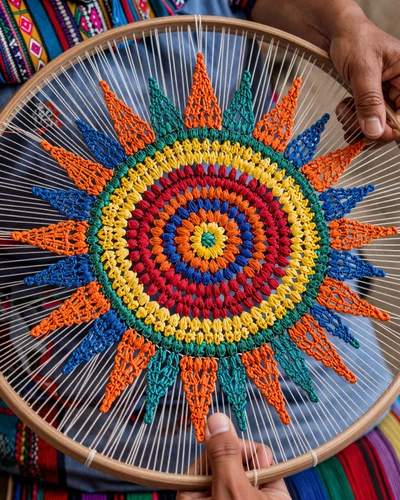
Ñanduti - meaning "spider web" in Guaraní - is Paraguay's most iconic art form: intricate, sun-shaped lace woven on fabric stretched over frames, using techniques passed from mother to daughter for over 400 years. The town of Itauguá is the ñanduti capital, but women across Paraguay practice this art form as a meditation, a community activity, and a connection to ancestral identity. A Paraguayan woman who weaves ñanduti embodies the patience, precision, and creative beauty that define her approach to all of life - including love. If she gifts you a piece of ñanduti, understand that hours of her focused devotion went into every thread. That level of care is exactly what she'll bring to your relationship.
Paraguay's Catholic faith runs deeper than Sunday Mass - it structures the entire social calendar. From the Caacupé pilgrimage (Paraguay's most important religious festival, drawing over a million worshippers each December) to neighborhood patron saint celebrations, Catholic traditions create the moral framework within which Paraguayan women approach commitment. She views marriage as a sacrament, not a contract. Fidelity isn't negotiable. Vows are made before God, family, and community, and breaking them carries spiritual weight alongside social consequences. This deep religiosity also means she expects her partner to respect - if not share - her faith. You don't need to convert, but you do need to understand that her spiritual life is inseparable from her identity.
While many Latin American countries marginalize indigenous heritage, Paraguay celebrates it. Guaraní culture isn't a museum exhibit - it's a living, breathing part of daily life, from language to food to folklore. The Guaraní concept of "teko porã" (living well, in harmony with nature and community) shapes how Paraguayan women define a good life: not wealth and status, but balance, connection, and mutual care. This philosophical foundation makes Paraguayan women natural relationship builders. She doesn't pursue happiness as an individual achievement - she creates it as a shared experience within her family and community.
Paraguayans call their country "el corazón de América del Sur" - the heart of South America. This isn't just geographic marketing. Landlocked between Argentina, Brazil, and Bolivia, Paraguay has absorbed cultural influences from all directions while maintaining a fiercely independent identity. Paraguayan women carry this centrality in their personalities: they're bridge-builders, connectors, mediators who find harmony between opposing forces. In your relationship, she'll be the one who smooths cultural differences, translates between your world and hers, and creates a home that honors both heritages equally.
| Aspect | Paraguayan Dating Culture | Western Dating Culture |
|---|---|---|
| Bilingual Heritage | Guaraní and Spanish used interchangeably - emotions often expressed in Guaraní for deeper intimacy | Monolingual English standard; multilingualism is a bonus, not an expectation |
| Family Hierarchy | Parents and grandparents hold decisive authority over relationship decisions; their blessing is required | Parents are consulted but rarely hold veto power; individual choice dominates decisions |
| Religious Devotion | Catholic faith deeply integrated into daily life - church attendance, prayers before meals, saint festivals | Religious practice varies widely; many couples have different faiths or no formal practice |
| Tereré Culture | Daily communal tereré circles create social bonds; refusing to share signals rejection | No equivalent communal beverage ritual; social bonding happens at bars, restaurants, or events |
| Gender Expectations | Traditional complementary roles valued - she creates the home, he provides stability - though women also work professionally | Equal partnership expected with shared domestic duties and financial contributions |
| Courtship Formality | Man formally asks parents for permission to date; courtship has structured, respect-based progression | Casual "hanging out" phase precedes formal dating; parents meet partners much later |
| Commitment Timeline | Exclusivity assumed after a few dates; marriage discussions begin within months of serious dating | The "what are we" conversation often delayed; engagement after 2-3 years is common |
| Public Affection | Modest displays - hand-holding and cheek kisses common; overt physical intimacy reserved for private | Varies widely; public displays of affection are generally socially acceptable |
Cultural comparison based on common relationship patterns - individual preferences may vary.
Meeting your Paraguayan match in person transforms your online connection into something real and lasting. Paraguay is one of South America's most affordable destinations - a country where warmth and authenticity define every interaction. Your first trip will likely center on Asunción, but the entire country offers romantic potential that surprises even seasoned Latin American travelers.
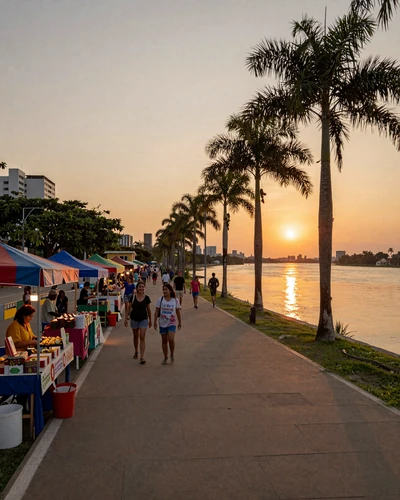
Paraguay's capital sits along the wide Paraguay River, blending colonial architecture with modern shopping districts and a growing restaurant scene. Asunción lacks the flashy glamour of Buenos Aires or São Paulo, which is precisely its charm - romance here feels genuine rather than performative. The Costanera riverside promenade offers stunning sunset walks. The historic center around the Palacio de los López provides atmospheric backdrops for early dates. The Loma San Jerónimo neighborhood's cobblestone streets and colorful houses create intimate walking-date settings. Restaurants serve enormous portions of traditional Paraguayan food at astonishing prices - a full dinner for two rarely exceeds $25.
If you time your visit for February, Encarnación's Carnival rivals Brazil's in energy (if not in scale). Located on the Paraná River facing Argentina, Encarnación combines beach culture, historic Jesuit mission ruins (UNESCO World Heritage), and the most exuberant celebrations in Paraguay. Taking your Paraguayan match to Carnival demonstrates that you embrace joy, celebration, and her cultural traditions - all qualities she's evaluating in a long-term partner.
Before your trip, learn these foundational Guaraní phrases that will profoundly impress her and her family:
| Expense Category | Budget Estimate | Notes |
|---|---|---|
| Round-trip flights | $700 - $1,100 | Flights from Miami or Houston to Asunción (Silvio Pettirossi Airport); often with connection in Lima or São Paulo |
| Accommodations | $300 - $600 | Quality hotel or Airbnb in Asunción; $25-50 per night - significantly cheaper than neighboring countries |
| Meals and dining | $200 - $400 | Restaurant dinner $8-15; parrilla steak $10-18; empanada lunch $4-7; street food $2-3 |
| Activities and dates | $100 - $250 | Jesuit ruins tour $10-20; Encarnación beach day $5; museum entry $3-8; Carnival events $10-30 |
| Local transportation | $80 - $150 | Taxi/Uber available in Asunción; intercity buses very affordable ($5-15 for long distances) |
| Gifts for her family | $50 - $100 | Quality imported whisky, American chocolates, gifts for children if she has nieces/nephews |
| Total estimated | $1,430 - $2,600 | Paraguay is one of the most affordable dating destinations in South America |
Budget estimates for a 10-14 day trip to Paraguay in 2026.
Paraguay's affordability makes it an ideal first-trip destination. Nearby alternatives with different cultural profiles include Chile, which offers a more cosmopolitan dating scene, and Bolivia, which shares Paraguay's indigenous cultural pride and accessible travel costs.

Paraguayan women aren't seeking wealth, luxury, or a visa to the United States. What draws them to American men is a set of relational qualities they find scarce in Paraguay's traditional machismo dating culture. Understanding these motivations helps you present your genuine self - and succeed where other men fail.
These values resonate across the interior of South America. Bolivian women share Paraguay's emphasis on humility and indigenous cultural pride, while Uruguayan women appreciate the same mate-sharing tradition and quiet devotion in a partner.
While the vast majority of Paraguayan women on Latin Hiwr are genuine and verified, standard vigilance protects your time and finances. Be cautious of profiles that request money before meeting in person, consistently avoid video calls, share inconsistent personal details, or pressure you to move communication off-platform. Latin Hiwr's multi-step verification (government ID, live photo check, video introduction) and AI-powered anti-scam monitoring create a 99.9% scam-free environment - but your own awareness remains your strongest defense.
Whether you're just discovering Paraguay or have been researching Paraguayan dating for months, these core truths will guide every step of your journey:
Guaraní is an indigenous language spoken by over 90% of Paraguayans alongside Spanish - making Paraguay the only truly bilingual country in the Americas. It matters because Paraguayan women express their deepest emotions in Guaraní, and learning even basic phrases like "rohayhu" (I love you) or "mba'éichapa" (how are you?) demonstrates a level of cultural respect that profoundly deepens your connection. On Latin Hiwr, our translation tools handle both Spanish and Guaraní to ensure nothing gets lost in communication.
English proficiency in Paraguay is limited compared to other Latin American countries. Most Paraguayan women speak Spanish and Guaraní fluently, but English is not widely taught outside private international schools in Asunción. Latin Hiwr's real-time translation tools bridge this gap seamlessly during chats and video calls. However, learning basic Spanish dramatically improves your experience and shows commitment that she'll deeply appreciate. Many Paraguayan women on our platform are actively learning English as part of their interest in cross-cultural relationships.
Tereré is Paraguay's national drink - cold yerba mate infused with medicinal herbs (yuyos) and ice water, shared from a communal gourd through a metal straw called a bombilla. It's consumed multiple times daily and is the foundation of all social bonding in Paraguay. Sharing tereré with her family is equivalent to being formally welcomed into the family circle. The ritual carries deep cultural significance - refusing to participate or mishandling the bombilla (like stirring it) is considered disrespectful. Embrace tereré, and you embrace Paraguayan life itself.
Paraguay is one of the most affordable countries in South America for American visitors. A quality hotel in Asunción costs $25-50 per night, a full restaurant dinner for two runs $15-25, and local transportation is extremely cheap. The total budget for a 10-14 day trip ranges from $1,430 to $2,600 including flights - significantly less than trips to Argentina, Brazil, or Colombia. This affordability means you can visit more frequently, building the in-person connection that Paraguayan women prioritize.
Approximately 87% of Paraguayans identify as Roman Catholic, and faith plays a central role in daily life. Most Paraguayan women attend Sunday Mass regularly, pray before meals, and participate in religious festivals like the annual Caacupé pilgrimage. She views marriage as a sacred sacrament with lifelong commitment. You don't need to convert to Catholicism, but you must respect her faith, participate willingly in religious family events, and understand that her spiritual values directly shape her expectations of fidelity, honesty, and family life.
The K-1 fiancé visa process for Paraguayan women follows the same USCIS requirements as any other country. You must file Form I-129F with evidence of your genuine relationship (chat logs, photos, video call records, travel receipts), attend a consular interview at the U.S. Embassy in Asunción, and demonstrate that you've met in person within the past two years. Processing time averages 8-14 months. Total costs including filing fees, medical exams, and travel run approximately $1,500-$2,500. Latin Hiwr provides K-1 visa guidance resources for premium members.
Paraguayan women are uniquely distinguished by their bilingual Guaraní-Spanish heritage, profound humility, and indigenous cultural pride. Unlike more cosmopolitan Latinas from Argentina or Brazil, Paraguayan women lead with quiet warmth rather than dramatic expression. They're deeply traditional, community-oriented, and value substance over appearance. The ñanduti lace tradition reflects their character - patient, detail-oriented, and devoted to creating beauty through sustained effort. Their connection to Guaraní culture gives them a spiritual depth rooted in thousands of years of indigenous wisdom.
The average timeline for Latin Hiwr couples who married Paraguayan women is 14 to 20 months. This typically includes 3-5 months of daily online communication (messaging, video calls, language practice), a first visit to Paraguay (10-14 days), 2-3 additional visits over 6-10 months, and then the K-1 fiancé visa process taking an additional 8-14 months. Paraguayan women appreciate a steady, intentional pace - rushing makes them uncomfortable, while a man who demonstrates patient commitment earns her deepest trust.