
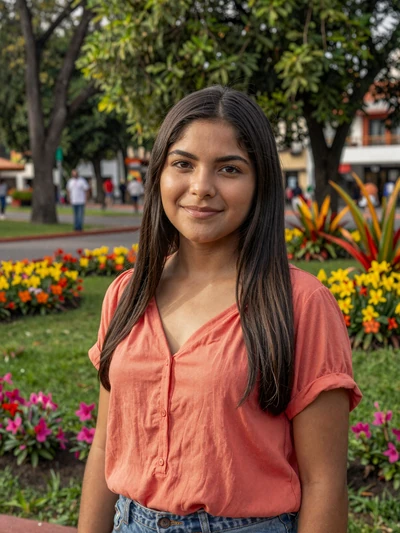
 ✓ Verified
Karla, 25
San Salvador, El Salvador
Elementary school teacher who loves making pupusas on weekends, attending Sunday mass, and dreaming of a loyal partner to build a family with.
Experience the resilience, loyalty, and warmth of Salvadoran women who value family above everything. Latin Hiwr connects you with thousands of verified profiles from San Salvador, Santa Ana, San Miguel, and across El Salvador.
✓ Verified profiles · Free registration · Video chat available
Salvadoran women are the quiet powerhouses of Central American dating - forged by resilience, anchored by faith, and driven by a loyalty so deep it shapes every dimension of their lives. If you've grown tired of superficial connections and swipe-fatigue dating culture, a Salvadoran woman offers something you won't find easily in the United States: a partner who treats commitment as a sacred promise, not a temporary arrangement.
El Salvador is the smallest country in Central America, but its cultural impact is enormous. Decades of civil conflict, natural disasters, and economic hardship have produced a generation of women who are simultaneously tough and tender - women who know hardship intimately but choose warmth, optimism, and family devotion as their daily response. This resilience isn't performative. It's woven into the way a Salvadoran woman cooks pupusas using her grandmother's recipe at 5 AM before heading to work, sends money to cousins studying abroad, and still greets you at the door with a smile that makes every challenge dissolve.
What surprises most American men is the strength of the Salvadoran diaspora connection to the United States. Over 2.3 million Salvadorans live in the US - the largest Central American community in America - concentrated in cities like Los Angeles, Houston, Washington D.C., and Long Island. This means many Salvadoran women already understand American culture, speak functional English, and have family members stateside who can ease the cultural transition. You're not bridging an ocean of cultural difference; you're connecting two worlds that are already deeply intertwined.
Their devout Catholic upbringing instills values that align perfectly with what marriage-minded American men seek: fidelity, sacrifice, compassion, and an unshakable belief that family is life's highest calling. Salvadoran women share these Central American family values with their neighbors - Guatemalan women carry a similar indigenous-Catholic cultural blend, while Mexican women mirror the same multi-generational household traditions and deep maternal devotion that define Salvadoran family life.
The hardworking nature of Salvadoran women is legendary across Latin America. Whether she's running a small business in the Mercado Central, studying nursing at the Universidad de El Salvador, or managing a household of extended family, she approaches every responsibility with a determination that American men consistently describe as inspiring. She doesn't want a rescuer - she wants a teammate who matches her work ethic and respects the strength she's built through adversity.
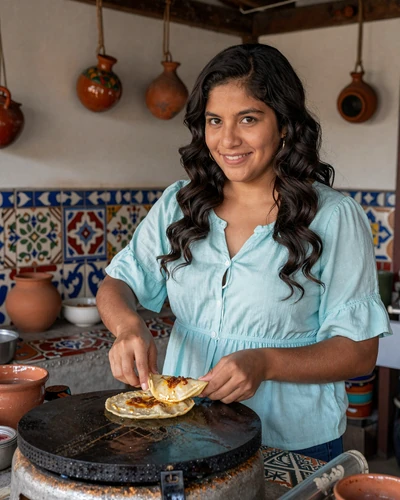 ✓ Verified
San Salvador, El Salvador
Elementary school teacher who loves making pupusas on weekends, attending Sunday mass, and dreaming of a loyal partner to build a family with.
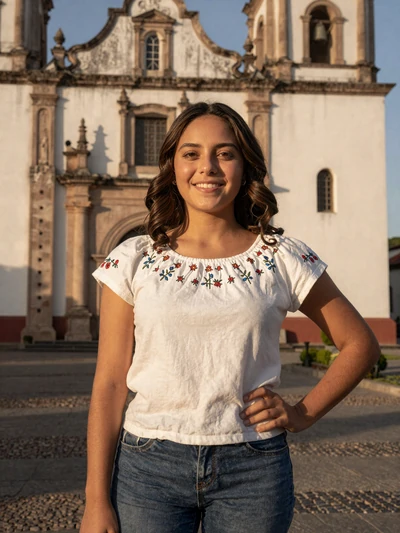 ✓ Verified
Santa Ana, El Salvador
Nurse with a heart of gold who values honesty, family gatherings, and exploring the coffee plantations near her hometown.
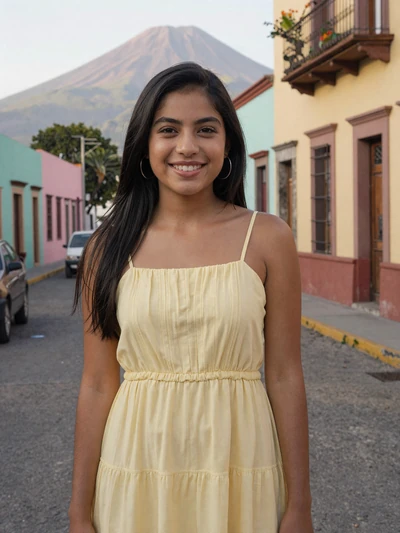 ✓ Verified
San Miguel, El Salvador
Business administration student who cooks the best pupusas de queso in her family and seeks a partner who respects her ambitions.
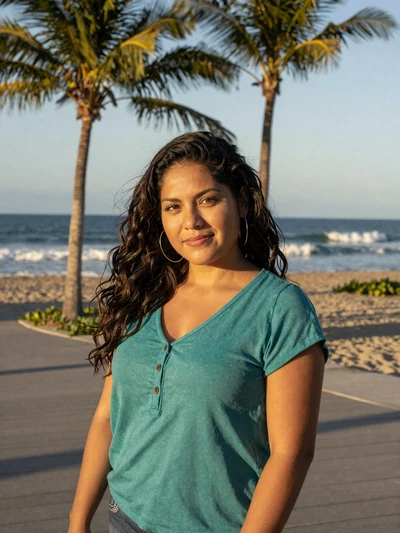 ✓ Verified
La Libertad, El Salvador
Small business owner near the coast who loves surfing, beach sunsets, and building a life rooted in trust and devotion.
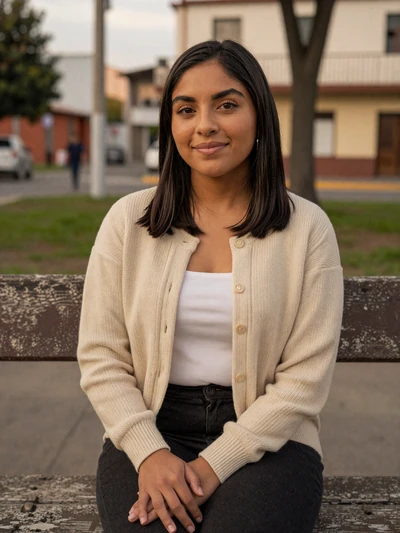 ✓ Verified
Soyapango, El Salvador
Accountant and devoted daughter who values church on Sundays, homemade curtido, and a partner who shows up consistently.
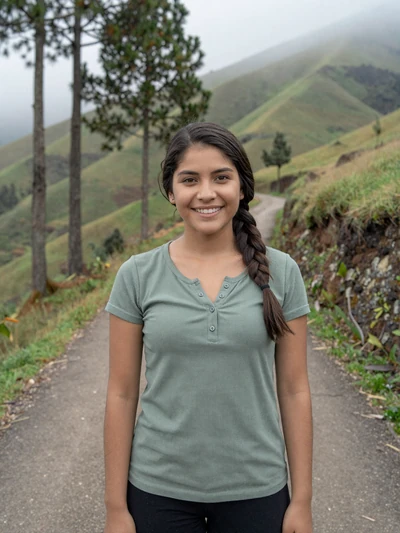 ✓ Verified
Chalatenango, El Salvador
Agricultural science student passionate about El Salvador's natural beauty, hiking pine forests, and finding a man who shares her faith.
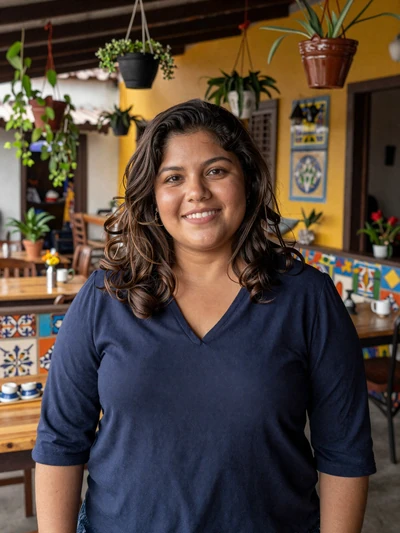 ✓ Verified
San Salvador, El Salvador
Single mother and restaurant manager seeking a stable, honest man ready for a loving blended family and genuine partnership.
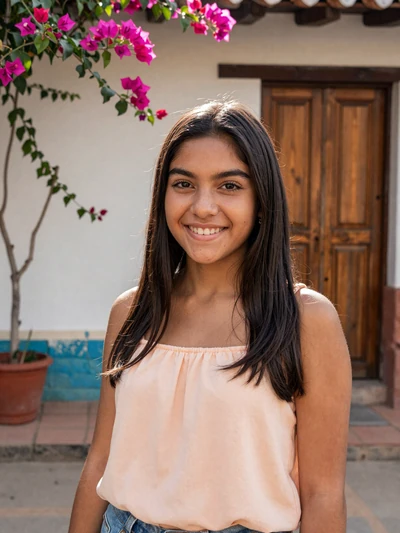 ✓ Verified
Usulután, El Salvador
Aspiring veterinarian who adores animals, cooking traditional sopa de pata with her abuela, and genuine conversations that last for hours.
Understanding Salvadoran culture isn't optional - it's the key that unlocks a genuine relationship with a Salvadoran woman. Her identity is built on three unshakable pillars: her Catholic faith, her family's traditions, and the communal resilience that defines guanaco culture. Master these three elements and you'll earn a loyalty that lasts a lifetime.
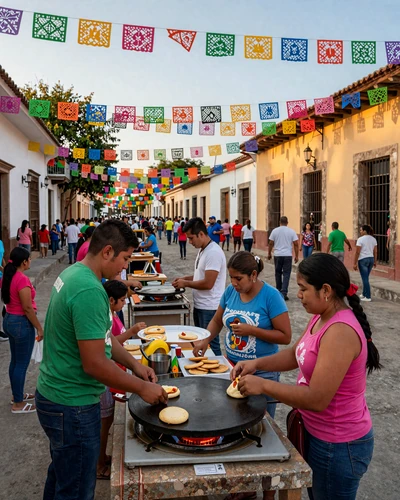
If tango defines Argentinian romance and samba defines Brazilian passion, then pupusas define Salvadoran love. These handmade stuffed corn tortillas - filled with queso, frijoles, chicharrón, or loroco (a native edible flower bud) - are El Salvador's national dish and its most intimate culinary tradition. A Salvadoran woman's pupusa recipe is inherited from her mother and grandmother, refined through decades of practice, and shared only with those she considers family. When she invites you to make pupusas together - hands in the masa, standing side by side at the comal - she's inviting you into her ancestral lineage. Complimenting her pupusas isn't flattery; it's a declaration of respect for her heritage.
El Salvador is one of the most devoutly Catholic nations in the Western Hemisphere. Faith isn't compartmentalized into Sundays - it governs how Salvadoran women view marriage (a sacrament, not a contract), resolve conflicts (through forgiveness and patience), raise children (with moral discipline and compassion), and treat strangers (with generosity rooted in biblical hospitality). Attending mass with her family is one of the most powerful gestures you can make, even if you're not Catholic yourself. It signals respect for the spiritual dimension of her life that she considers non-negotiable.
Salvadorans call themselves guanacos with enormous pride - a term that encapsulates the communal resilience forged through decades of shared hardship. In Salvadoran neighborhoods, everyone watches out for each other's children, shares plates of food over fences, and shows up for every celebration and crisis. When you marry a Salvadoran woman, you don't just gain a wife - you gain an entire community. Her best friend's mother becomes your tía. Her cousin's mechanic shop becomes where you fix your car. This interconnected social fabric is one of the greatest gifts of Salvadoran partnership.
Salvadoran women are among the hardest-working women in Central America. Economic necessity and cultural pride combine to produce women who can manage a household, run a business, pursue education, and still have dinner on the table by 7 PM. This isn't exhaustion - it's identity. She takes pride in her ability to provide, create, and sustain. The mujer salvadoreña stereotype is a woman who never stops, never complains, and never asks for help unless she truly needs it. When she asks, pay attention - it means something significant.
This tireless work ethic resonates throughout Central America. Honduran women share the same Garifuna-mestizo resilience and family-centric work values, while Nicaraguan women carry a parallel tradition of community solidarity and maternal strength shaped by similar historical challenges.
No other Central American country has a diaspora presence in the United States as significant as El Salvador's. Over 2.3 million Salvadoran-Americans live across the US, with major communities in Los Angeles, the D.C. metro area, Houston, and New York. This means your Salvadoran partner likely has family in America already - cousins in Maryland, an uncle in Virginia, siblings in California. The cultural bridge is already built. She may already understand American workplace culture, holiday traditions, and social expectations. Many Salvadoran women on Latin Hiwr are bilingual or have functional English skills specifically because of these diaspora connections.
| Aspect | Salvadoran Dating Culture | American Dating Culture |
|---|---|---|
| Family Role in Relationships | Family is involved from very early stages; her parents' blessing is practically required before the relationship becomes serious | Family meets partner after several months; dating decisions are considered personal, not family matters |
| Courtship Formality | Traditional courtship expected - man visits her home, meets parents, brings gifts, and demonstrates serious intentions before exclusive dating begins | Casual dating and "talking stages" are common; formality is minimal and exclusivity requires direct conversation |
| Faith and Spirituality | Catholic faith deeply integrated into daily life, relationship values, and marriage expectations; attending church together is a bonding ritual | Religious practice varies widely; many couples don't share the same faith or attend services together regularly |
| Work Ethic Expectations | Both partners expected to work tirelessly for the family; laziness is a serious character flaw and dealbreaker | Work-life balance is emphasized; personal time and hobbies are protected alongside professional obligations |
| Communication Style | Indirect about negative feelings initially but deeply expressive about love and affection; body language carries heavy meaning | More direct verbal communication expected; "saying what you mean" is valued over reading between the lines |
| Commitment Timeline | Serious commitment and marriage discussions within 3-6 months of formal dating; long undefined relationships are viewed with suspicion | The "what are we" conversation may take months; cohabitation often precedes any marriage discussion by years |
| Gift-Giving Culture | Small, frequent gifts - flowers, her favorite snack, a surprise visit - demonstrate ongoing care and emotional investment | Gifts concentrated around holidays and anniversaries; daily gift-giving can feel unusual or excessive |
| Physical Affection Norms | Public affection is warmly expressed - hand-holding, arm-linking, cheek kisses are constant between couples | Public displays of affection vary by region and personality; some couples are reserved in public settings |
Cultural comparisons based on common Salvadoran and American dating experiences - individual preferences may vary.
Salvadoran women don't need grand gestures - they need consistent, genuine effort. The man who wins a Salvadoran woman's heart is the one who shows up reliably, respects her family, appreciates her culture at a granular level, and demonstrates that his intentions extend far beyond casual dating.
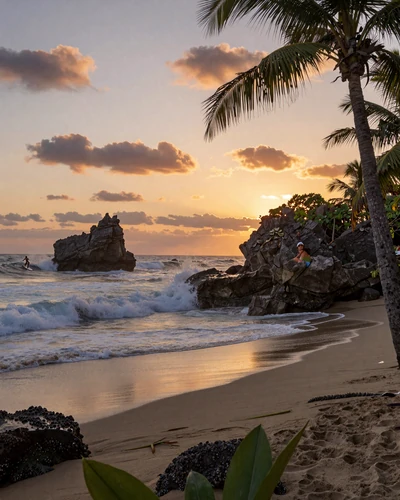
El Salvador has undergone a dramatic security transformation in recent years. President Nayib Bukele's security reforms have reduced homicide rates by over 70% since 2019, making it one of the safest Central American countries to visit in 2026. Standard travel precautions apply: stay in well-known tourist zones, use registered taxis or Uber, avoid displaying expensive jewelry, and travel with a local guide when exploring rural areas. San Salvador's Zona Rosa and Colonia Escalón neighborhoods offer upscale dining and nightlife on par with any major Latin American city.
Salvadoran women communicate differently than American women, and understanding these nuances prevents misunderstandings that can derail a promising relationship:
These courtship principles echo across Central America. Costa Rican women share the emphasis on family-first lifestyle and eco-conscious values, while Mexican women equally value the tradition of formally meeting the family early in the courtship process.
| Expense Category | Budget Estimate | Notes |
|---|---|---|
| Round-trip flights | $350 - $650 | Direct flights from Houston, LA, Miami, D.C. to San Salvador (SAL); book 4-6 weeks ahead |
| Accommodations | $350 - $700 | Quality hotel or Airbnb in San Salvador or La Libertad; $30-55 per night |
| Meals and dining | $200 - $400 | Restaurant dinner $8-18; pupusa plate $2-4; seafood at the beach $10-20; café lunch $5-8 |
| Activities and dates | $150 - $300 | Ruta de las Flores day trip $40; surf lesson $25; Joya de Cerén entry $5; coffee tour $30 |
| Local transportation | $80 - $150 | Uber available in San Salvador; private driver $50-80/day for excursions; local bus $0.25 |
| Gifts for her family | $50 - $100 | Flowers, pastries, items from the US, toys for children in the family |
| Total estimated | $1,180 - $2,300 | El Salvador is one of the most affordable dating destinations in the Americas |
Budget estimates for a 10-14 day trip to El Salvador in 2026. US dollars accepted widely.
Salvadoran women aren't drawn to American men for financial reasons alone - many are hardworking professionals who earn their own income. What they seek is a specific relational character that they find increasingly rare in the domestic dating landscape. Understanding these values positions you as the partner she's been praying for.
These values mirror what women across Central America seek. Guatemalan women equally prioritize faith, family respect, and cultural appreciation, while Honduran women share the same emphasis on reliability and honest character as the foundation for lasting partnership.
The overwhelming majority of Salvadoran women on Latin Hiwr are genuine, verified members seeking real relationships. However, standard vigilance protects your time and finances. Be cautious of profiles that request money before meeting in person, consistently avoid video calls, share inconsistent personal details, or pressure you to move communication off the platform. Latin Hiwr's multi-step verification (government ID, live photo check, video introduction) and AI-powered anti-scam monitoring create a 99.9% scam-free environment - but your own awareness remains your strongest defense. Always video chat before booking your flight.
Whether you're just beginning your research or ready to create your profile, these core truths will guide every step of your journey with a Salvadoran woman:
Many Salvadoran women are open to relocating to the US, especially given the strong diaspora community that provides a built-in support network. However, the desire to move is driven by a wish to build a stable family life with the right partner - not by a desire to escape El Salvador. Many Salvadoran women on Latin Hiwr love their country deeply and would be equally happy building a life together in El Salvador if their partner is open to it. The motivation is always the relationship first, the location second.
El Salvador has experienced a dramatic security improvement since 2019. Homicide rates have dropped by over 70%, and tourist areas like San Salvador's Zona Rosa, La Libertad, Suchitoto, and the Ruta de las Flores are considered safe for foreign visitors. Standard precautions apply: use registered transportation, avoid displaying expensive items, stay in recommended neighborhoods, and travel with your local partner when exploring less touristy areas. Many Latin Hiwr members report feeling safer in San Salvador than in some major US cities.
Spanish is the primary language of El Salvador. However, due to the massive Salvadoran diaspora in the United States, many urban Salvadoran women have functional English skills - especially those with family members in cities like Los Angeles, Houston, or Washington D.C. Latin Hiwr's real-time translation tools handle complex conversations seamlessly, but learning basic Spanish phrases like "me gustas mucho" (I like you a lot) and "tu familia es increíble" (your family is incredible) dramatically deepens your connection.
Family approval is essentially a prerequisite for a serious relationship with a Salvadoran woman. The process typically involves: (1) She mentions you to her family during early dating stages, (2) You are formally invited to her family home for a meal, (3) Her father evaluates your character and intentions through conversation, (4) Her mother assesses your manners and how you treat her daughter, (5) Extended family members form opinions based on your behavior at gatherings. Bringing thoughtful gifts, showing respect to elders, and expressing your serious intentions directly to her father accelerate the approval process significantly.
A pupusa date is one of the most authentic and meaningful experiences in Salvadoran courtship. You visit a local pupusería together or - even better - she teaches you to make pupusas at home. The process involves mixing the corn masa, filling it with cheese (queso), beans (frijoles), or chicharrón, shaping it by hand, and cooking it on a flat comal griddle. Served with curtido (fermented cabbage relish) and tomato salsa, the meal costs $2-4 per person but creates memories worth a lifetime. It's intimate, fun, slightly messy, and deeply cultural - exactly how Salvadoran romance works best.
The K-1 fiancé visa process from El Salvador follows the standard USCIS pathway: (1) File Form I-129F petition with proof of your relationship, (2) Wait 6-10 months for USCIS approval, (3) Your fiancée attends an interview at the US Embassy in San Salvador, (4) Upon approval, she receives a visa to enter the US, (5) You must marry within 90 days of her arrival. Total cost averages $1,500-$2,500 including filing fees, medical exam, and translation services. The Salvadoran embassy in San Salvador has experience processing these visas efficiently due to the large diaspora community.
Salvadoran culture is generally accepting of age differences of 10-15 years in committed relationships, especially when the older partner demonstrates maturity, stability, and genuine care. What matters far more than your birth year is your character - do you show up reliably, treat her family with respect, and demonstrate serious marriage intentions? A dependable, kind-hearted 48-year-old will always be preferred over an unreliable, immature 30-year-old. Her father's approval often hinges on your stability and character, not your age.
Salvadoran women carry a unique cultural identity shaped by the country's history of civil conflict and remarkable recovery. Their resilience runs deeper than neighboring cultures - they've been tested by adversity and emerged stronger. The massive US diaspora connection means many Salvadoran women are already culturally bilingual, understanding both Latin and American values. Their pupusa cooking tradition is uniquely Salvadoran and serves as the primary vehicle for cultural bonding. They tend to be more cautiously trusting than women from more tourist-heavy countries - once earned, their trust is absolute and unwavering.